A Sukany4 – The Podcast special | International Women’s Day 2026
This Episode is proudly sponsored by Nadia Enver Financial Planning and in collaboration with Carlise International Women’s Group and Woman Up.
A HUGE thank you to CIWG and Woman Up for inviting me to host this panel discussion and podcast live! It was a real priviledge to share space with such incredible women, non-binary and trans women, who were so open to the experience and discussion. I am so grateful. It was the most enriching discussion, and I hope you enjoy it too.
A Little Context First
Before we get into what was said, I want to say something about the day itself. Because International Women’s Day 2026 has arrived with a tension worth naming.
International Women’s Day doesn’t belong to any single organisation. That is one of the most interesting things about it. It began in 1910, when a German activist called Clara Zetkin proposed a global day for women’s rights at an international conference of working women. The idea spread quickly through labour movements and socialist groups campaigning for voting rights, fair wages and basic dignity. The first International Women’s Day events took place in 1911. The United Nations didn’t formally recognise the day until 1975, more than sixty years after ordinary women created it from the ground up.
That history is important, because what started as a day of collective action and political demand has, over time, become something more complicated.
Today, two very different themes are circulating under the same name.
The United Nations’ official focus for 2026 is: Rights. Justice. Action. For ALL Women and Girls. It centres legal protections, structural inequality, gender-based violence, and the fact that globally, women still have only around 64% of the legal rights men have.
Alongside that sits a theme produced by a privately owned UK marketing company, Aurora Ventures, which runs the website internationalwomensday.com. That site publishes its own yearly campaign slogans, and this year’s is Give to Gain. The UN has publicly clarified it has no affiliation with this website. And yet, because the site ranks highly in Google searches, many organisations assume it is the official source.
Hosting this panel with grace and integrity meant I felt compelled to sit with the two side of this coin; Give to Gain and Rights. Justic. Action.
Give to Gain is triggering, because for many women, migrant women, asylum seekers, refugees, trans women, non-binary, giving has never been optional. It has been expected. Time. Energy. Silence. Strength. Adaptation. Over and over. Exhaustingly.
A theme that asks women to give more to receive more can feel, depending on where you’re standing, less like inspiration and more like extraction.
So I made a decision. We would use Give to Gain, but we would hold it differently.
Not as a corporate prompt. As a reclaiming.
Giving voice to gain power. Giving visibility to gain representation. Giving support to gain community. Giving boundaries to gain sustainability. And sometimes, where safety allows, giving up silence to gain belonging.,
Not a transaction. A Transformation.
That was the frame we walked in with. And then the women in the room took it somewhere incredible!
About the Event
Sometimes you can’t stop thinking about that thing someone said, because of what it took to say it.
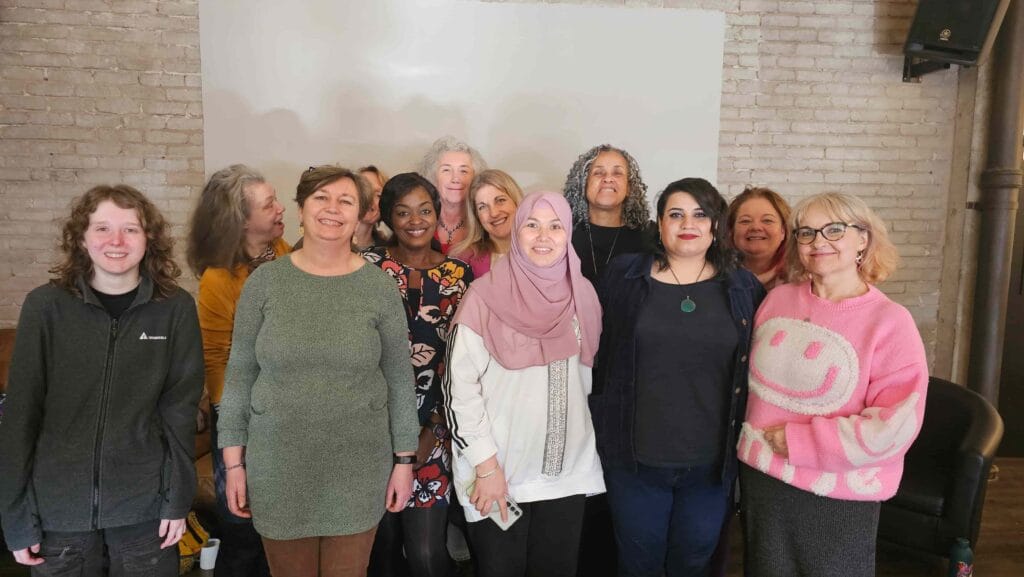
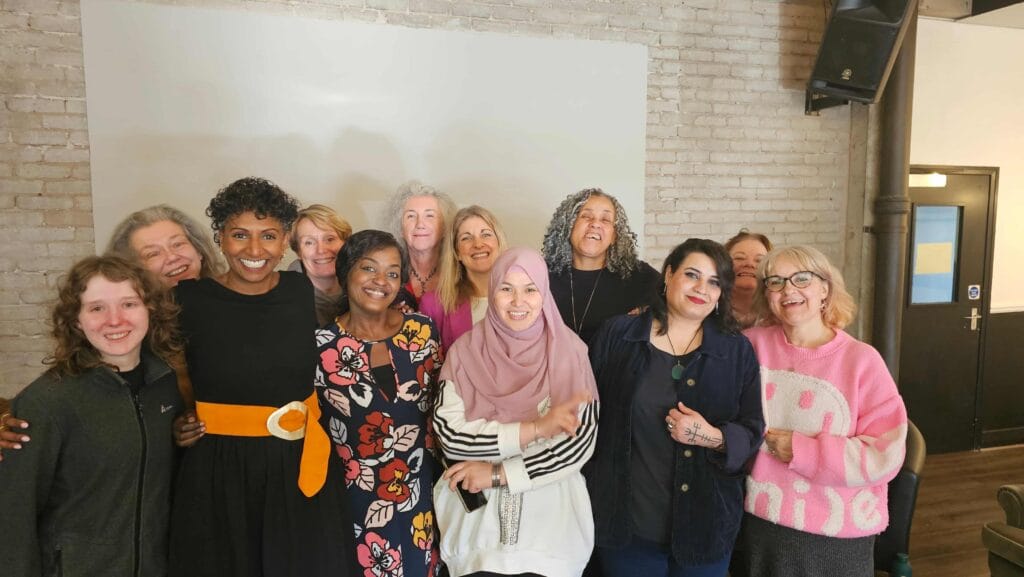
This International Women’s Day (2026), I had the privilege of sitting with 14 extraordinary women, non-binary and trans women in Carlisle, gathered by the Carlisle International Women’s Group and Woman Up, for a conversation built around this year’s theme: Give to Gain.
And what unravelled across that room was, without question, one of the most powerful exchanges I’ve been part of.
Unfortunately, due to a technical glitch (only the 2nd in over 30 episodes – and equally devastating), the first half of the discussion did not record very well. Thank you to CIWG, Woman up and the panelists for being so understanding and making time to re-record the first have over an online meeting – fear not, the content was exactly as powerful as it was in the room!
Giving Voice to Gain Power
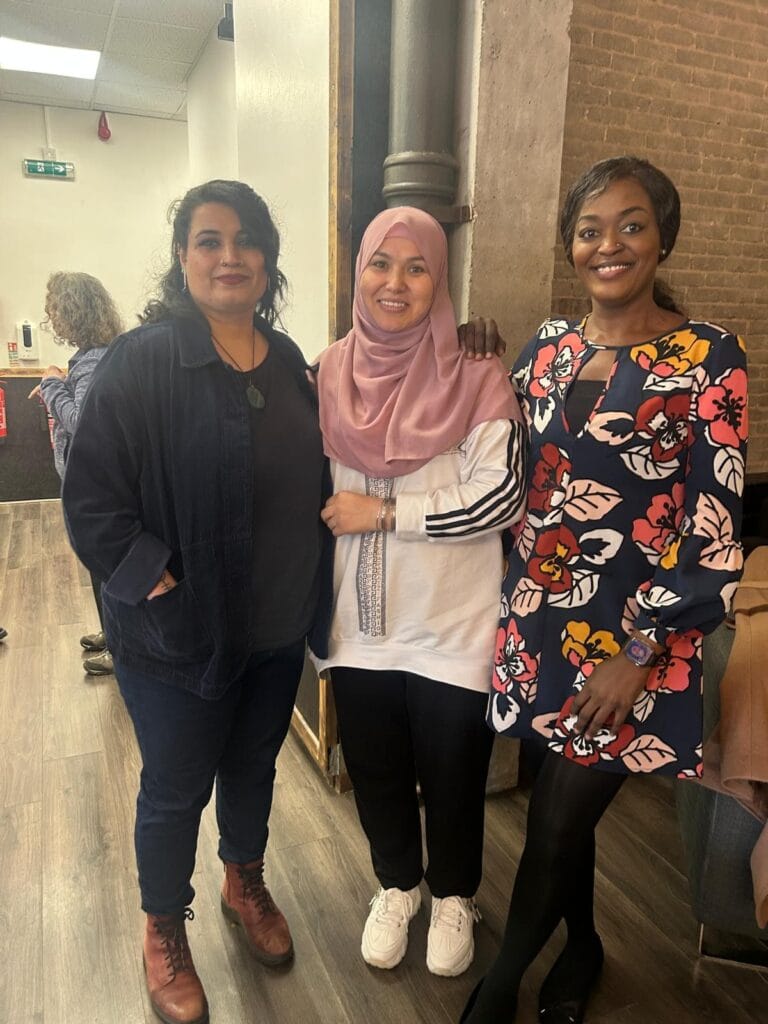
Mina arrived in the UK from a country where women’s voices were silenced not just by social expectation, but by law. She spoke about how finding community here, finding people who actively encouraged her to speak, slowly rebuilt something she had almost stopped believing she had.
Cynthia talked about being handed her voice early, by a father who empowered all five of his daughters. She spoke of walking into male-dominated security sectors, putting on her lipstick, refusing to erase herself, sitting at tables where she wasn’t supposed to be.
Tina, who grew up in the UK but whose father silenced the women around him, described finding her voice through years of conflict inside her own home. She spoke about unmasking, about her ADHD, about choosing carefully when and where her authentic self is safe to show.
And Fatima, who wanted, as a teenager, to open a charity school for women in her home country, and couldn’t, sat in that room and said: here, I have my own voice. I can do everything I want.
Giving Up Silence to Gain Belonging
This is where things got beautifully complicated.
Because giving up silence is not always brave. Sometimes it is dangerous. Sometimes silence is the most strategic, the most protective, the most courageous choice available to you. Fatima shared that, a story of choosing to stop retaliating against hostile neighbours. Of letting silence do the work that confrontation couldn’t. Of eventually being greeted with a hello.
Mina spoke about unlearning. About arriving somewhere you are finally free, but not knowing how to be free. About not knowing the word belonging until years after you’d arrived. About giving yourself permission, the most radical form of giving, to just be.
And Emma, a trans woman and former ship’s officer, quietly changed the texture of the room with her words. She transitioned 24 years ago. Since April 16th, her Gender Recognition Certificate has been declared effectively worthless. She has been offered accommodation in Holland by a friend, should she need to leave the UK. She said: I have never felt so unsafe in 25 years.
The room held that. And then kept going. Because that is what community does.
Giving Support to Gain Community
Cynthia talked about hitting a wall, integrating, missing home, managing health and self-esteem all at once, and eventually, reluctantly, picking up therapy. She said it was the hardest thing she’d ever done. She would never have believed, two years ago, that she’d be the person she is now.
Mina described how every woman in that room came to know another woman through an introduction. Like a verb, she said. A ripple effect. You support one person, they support someone else, and the network grows and holds.
Sam spoke about the responsibility that comes with platform, that once you see the world through a lens of social justice, you can’t unsee it, and that doesn’t always mean leading the protest. Sometimes it means helping someone else find their voice to speak out.
What We Committed To
At the close, we each shared our IWD 2026 commitment. The word cloud that formed held: courage, support, self care, community, voice, skills, belonging, self love.
Mine was this: to continue giving my skills to help someone else gain their voice.
Because that, for me, is what this podcast is. Not a platform for the famous or the polished. A platform for the grassroots. The people whose stories land in your chest, because we see, hear and feel a bit of ourselves in them.
Final Thoughts
In 2026, women, non-binary and trans women are still being silenced by law, by family, by systems that promised to protect them.
In 2026, a trans woman in Carlisle is considering leaving the country she built her life in, because she no longer feels safe.
In 2026, Fatima still grieves the girls in her home country who don’t know they have a voice.
And in 2026, fourteen women sat in a room in Carlisle and refused to stay quiet. They gave their stories, honesty and gave each other belonging.
Clara Zetkin didn’t propose a global day for women’s rights so that a marketing company could turn it into a hashtag. She proposed it because women were exhausted, undervalued, and done with being quiet about it.
More than a century later, the women in that room were doing exactly the same thing.
That is Give to Gain. In its most real, most powerful, most human form.
If this landed with you, share it with someone who needs to hear it. And if you’ve never heard of the Carlisle International Women’s Group or Woman Up, go find them. They are doing something important.
Resources & Connect
- Carlisle International Women’s Group: https://www.instagram.com/internationalwomensgroupca/
- Woman Up: https://www.instagram.com/ukwomanup/
are community organisations doing vital work supporting women across Cumbria.
Music in this episode is by Persimmon — our brilliant music partner: https://www.youtube.com/@bandcalledPersimmon
Did something from this conversation stay with you? Drop a comment, send a message, or leave a review.
Your voice matters. Use it.