Paul McAnulty on Trauma, Choice and Leadership: You Don’t Owe Anyone Your Story
Season 4, Episode 2 | Sukany4: The Walk and Talk Podcast
What if the most helpful thing you could ask someone who has experienced trauma isn’t what happened to them, but what they want their future to look like?
It’s a question that I’ve been pondering since my walk and talk with Paul McAnulty, CEO of Rebuild East Midlands.
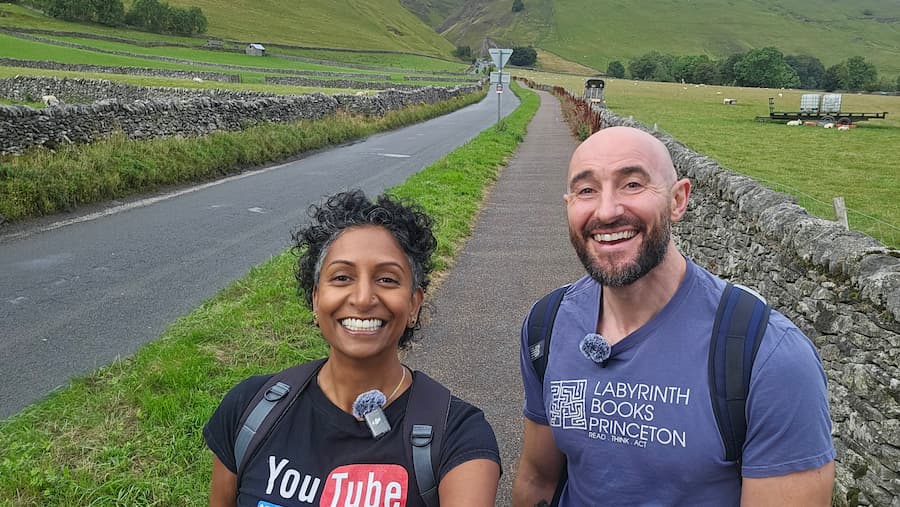
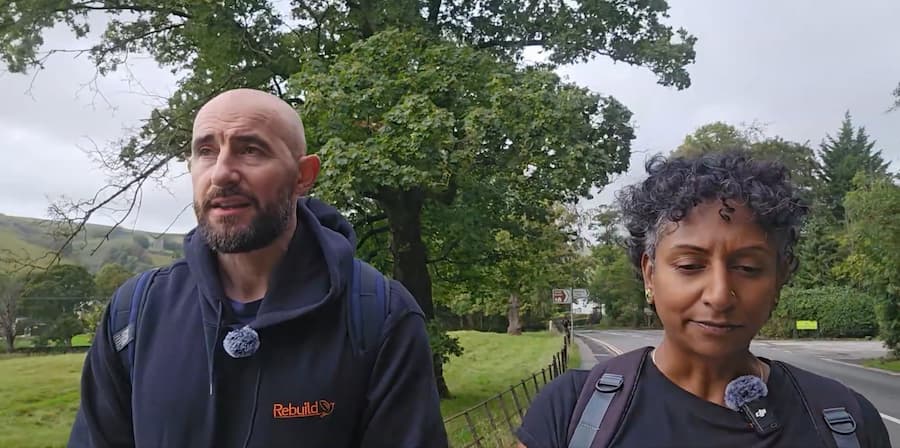
Paul and I first met virtually during Covid, when I was volunteering my business analysis skills with Hope for Justice. Several years later, we finally found ourselves walking together in the beautiful Hope Valley in Derbyshire.
And what a walk it was!
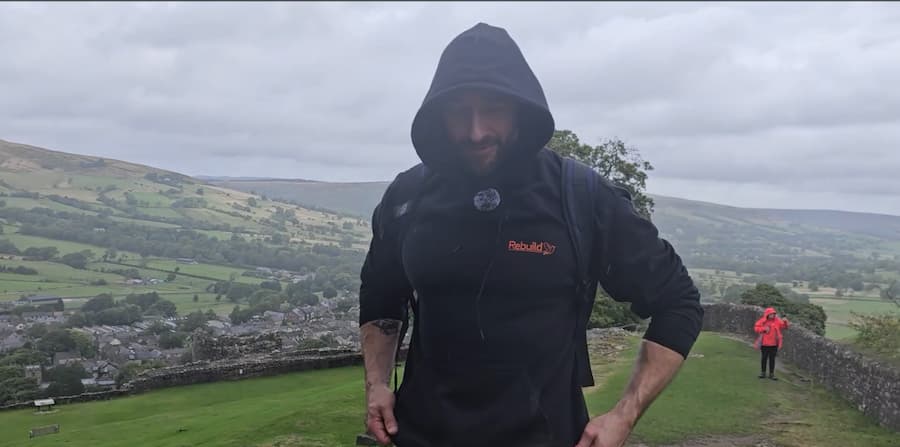
There were insanely strong winds and we ended up walking a spontaneous route through the beautiful streets of Castleton, finding our way to Peveril Castle.
Beneath the weaving around was a conversation about the things we carry, the assumptions we make about other people and what it actively helping someone move forward can look like.
Paul’s story isn’t quite what you might expect.
Behind the Job Title
When you meet someone who is the CEO of a charity supporting survivors of modern slavery and exploitation, it’s easy to begin with their professional achievements.
Paul has a personal relationship with some of the issues his organisation works to address.
He grew up in a home affected by serious domestic violence and child abuse.
At 12, his father put him to work washing caravans for £2 an hour, taking the money he earned. At 17, Paul was forced out of the family home and spent around six months sleeping rough.
These aren’t experiences he immediately understood through the language of exploitation or trauma.
At the time, they were simply part of the life he knew.
Paul shared that it took him a long time to recognise and make sense of what he’d experienced.
He went on to spend 13 years in law enforcement, beginning with work supporting people affected by domestic violence. Yet during those years, he didn’t disclose his own childhood experiences to his colleagues.
He describes a working culture where those experiences carried stigma rather than being recognised as something that could contribute to his professional understanding.
That raises an important question.
How many people work in organisations where they’re expected to support others, while feeling unable to talk about their own experiences?
And how much responsibility do employers have for creating environments where people feel psychologically safe?
From Surviving to Having a Say
Today, Paul leads Rebuild East Midlands, a survivor led, trauma informed organisation providing long term support and specialist advocacy for people who have experienced modern slavery and exploitation.
I was really interested to hear about what the charity does, and also how Paul talks about the people it supports.
During our conversation, he explains that survivors shouldn’t have to repeatedly disclose painful experiences to justify receiving help.
At Rebuild, the approach is to ask about the future.
What does someone want their life to look like? What support would help them move towards it?
It’s an important distinction and a refreshing reframing.
Instead of asking people to revisit what happened to them, the organisation works with them to identify what they need next.
Not doing things for people, but doing things with them.
We also explore the difference between consulting people with lived experience and genuinely sharing power.
It’s one thing to invite someone into a room and ask for their opinion.
It’s quite another to allow their perspective to change an existing plan, service or decision.
Paul challenges the assumption that survivors should automatically become spokespeople, campaigners or experts in the systems that have affected them.
Some will want to take on those roles. Others won’t.
And that’s their choice.
Lived experience is valuable, but it shouldn’t become another obligation.
The Privilege We Don’t Always Notice
Our conversation moves naturally into privilege, race, gender and the barriers people experience.
Paul points out that someone meeting him today might see a white male CEO and make assumptions about the opportunities he’s had.
They wouldn’t necessarily know anything about his childhood, his experience of homelessness or the journey that brought him to this work.
That doesn’t mean privilege disappears. It means people’s experiences are rarely as straightforward as the labels we attach to them.
We talk about the importance of recognising the advantages we may have in one area of life while acknowledging the difficulties we may have experienced in another.
As someone involved in anti-racism work, this really resonated with me.
We also explore the burden placed on people who have experienced discrimination or abuse to repeatedly explain, evidence or relive what happened to them.
Why should people have to revisit their pain before they’re believed?
And why are those affected by injustice so often expected to carry the responsibility for fixing it?
These aren’t questions with simple answers, but they’re conversations we need to be able to have.
Leadership Isn’t Just a Job Title
Paul’s journey has taken him through law enforcement, frontline support, programme leadership and now the responsibility of running a charity.
And that responsibility comes with some difficult realities.
Rebuild East Midlands operates in a challenging funding environment. Paul talks openly about grant rejections, financial uncertainty and the difficult balance between keeping services running and looking after the people delivering them.
One of the things I appreciated was his recognition that leadership isn’t about passing every worry on to your team.
His staff are already doing emotionally demanding work.
So how do you create space for honesty while also giving people the security they need to do their jobs?
We discuss mental health, clinical supervision, staff wellbeing and the effects of being repeatedly exposed to other people’s trauma.
Paul also talks about the qualities he values in leaders: empathy, curiosity, patience, kindness and compassion. About how it’s more than the ability to manage a budget or hold a senior title, which is something else worth remembering.
Sometimes leadership is the person who notices something isn’t right and decides to do something about it.
You don’t need a fancy title for that.
But What Makes You Happy, Paul?
Towards the end of our walk, I ask Paul one of my favourite questions.
What brings you joy?
And his answer is in part surprising and in part refreshingly honest.
He’s still figuring it out.
He shares how, during therapy, he initially answered that his son made him happy. His therapist encouraged him to explore what brought him joy as an individual, rather than placing that responsibility on his child.
It’s a question that sounds wonderfully “obvious” until you have to answer it.
Paul reflects on how growing up in an unsafe environment can affect your opportunity to discover who you are, what you enjoy and what makes you feel at ease.
Even now, in his forties, he’s learning.
We end up chatting about quiet weekends, sitting in front of a fire, finding time to stop and the pressure to make every moment productive.
We also have a laugh about the endless messages telling us to get up earlier, work harder, start another side hustle and somehow become an entirely new person before breakfast.
Honestly, it is exhausting.
Maybe ambition doesn’t mean climbing another ladder.
Maybe it can mean intentionally creating a life that is fully yours.
Final Thoughts
One of the things I keep coming back to from my conversation with Paul is how easily we can assume we understand somebody from their job title, appearance or achievements.
But we rarely know the whole story.
And perhaps we don’t need to.
We can offer compassion without demanding disclosure. We can recognise someone’s experience without making it their entire identity. And we can create opportunities for people to make decisions about their own lives.
I also loved that, after everything Paul has experienced and achieved, he’s still figuring out what brings him joy.
Aren’t we all, in one way or another?
So here’s something to think about.
Where in your life are you still living according to somebody else’s expectations?
And what might change if you gave yourself, or somebody else, a little more freedom to choose what comes next?
If Paul’s story resonates, please follow the podcast, leave a rating or review and share this episode with somebody who might connect with the conversation.
Every share helps these grassroots stories reach another person. 💚
Your story might be exactly what someone needs to hear today.
Resources & Connect
Paul McAnulty
CEO, Rebuild East Midlands
Paul McAnulty is CEO of Rebuild East Midlands, a survivor led, trauma informed charity supporting people affected by modern slavery and exploitation. His career includes 13 years in law enforcement, frontline survivor support and programme leadership within the anti exploitation sector.
Links:
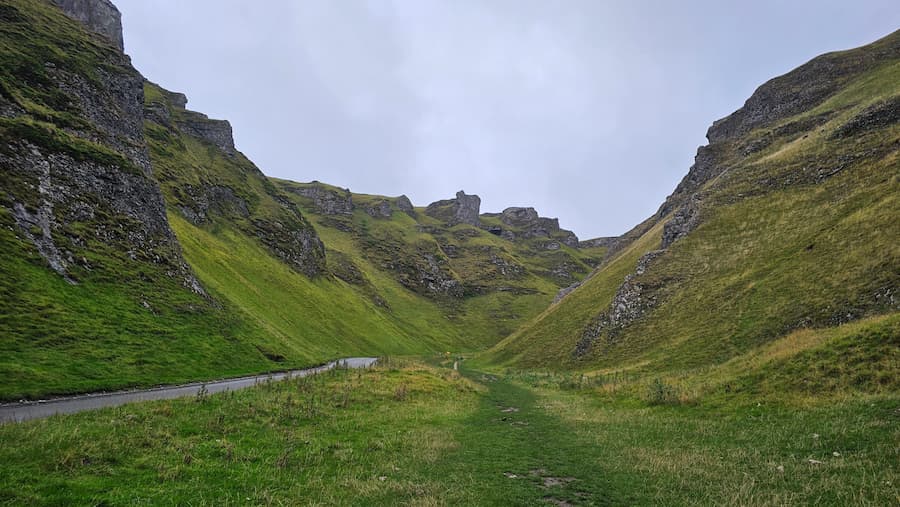
For this episode, Paul takes me beyond Cumbria to the Peak District, beginning around Winnat’s Pass near Castleton in the Hope Valley. It’s an extraordinary landscape, with steep limestone hills and dramatic views. It’s also creates an insane wind tunnel! The September wind has other ideas about our recording, and we eventually change direction, making our way downhill towards Castleton and the area around Peak Cavern, rather wonderfully nicknamed the Devil’s Arse, and eventually making our way to Peveril castle. It’s our first ever fully magical mystery tour of the podcast, ever, complete with deep chats, humour and the calm chaos I’m very well known for by now! Which somehow, it feels fitting. A conversation about finding your own way is nearly always not linear, not planned and adaptability and humour are essential.