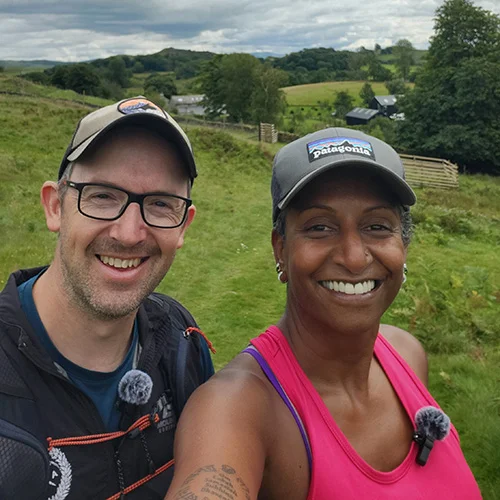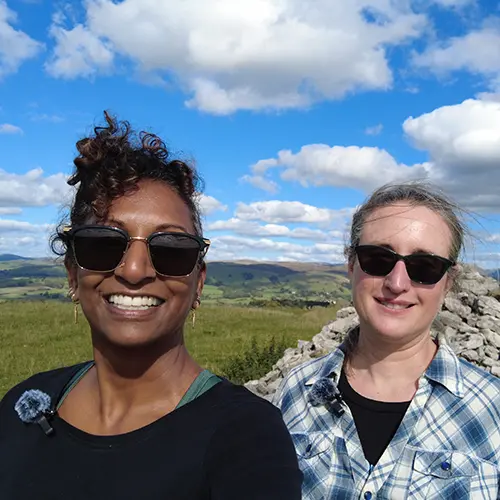
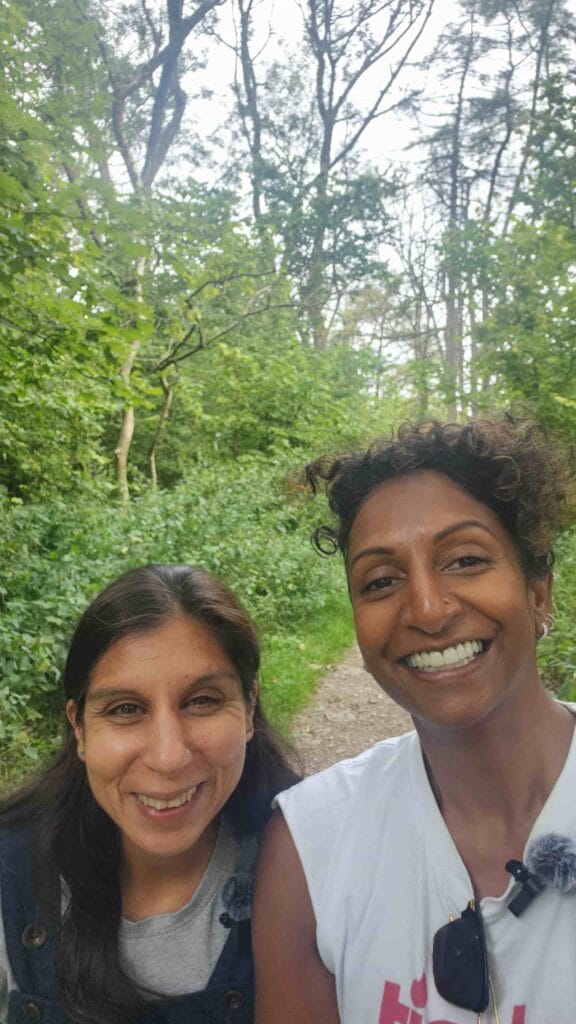
My walk and talk with Renee McGregor, sports dietitian, author, REDs specialist, and a quietly powerful voice in athlete health was stunning – in location and richness of content!
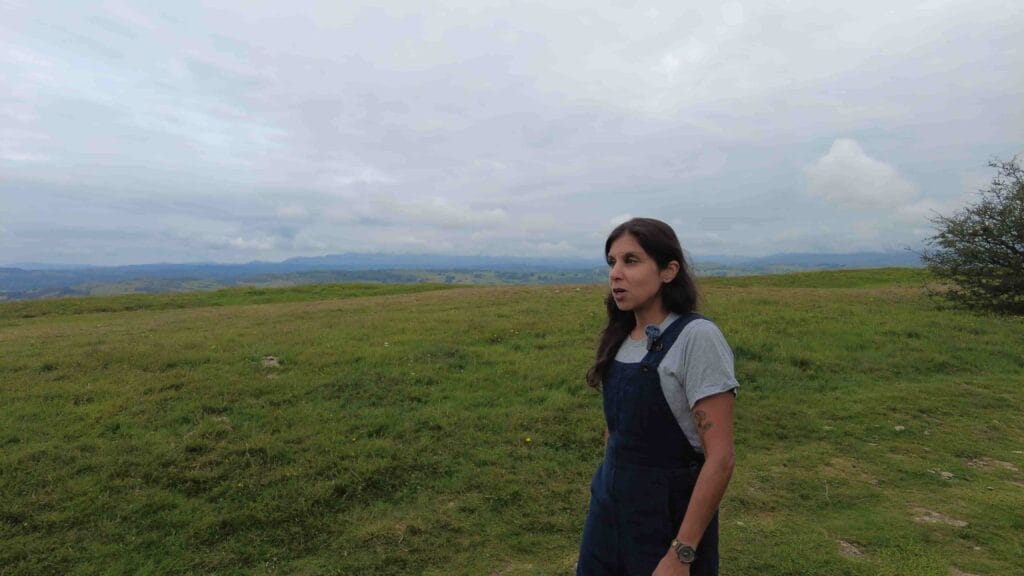
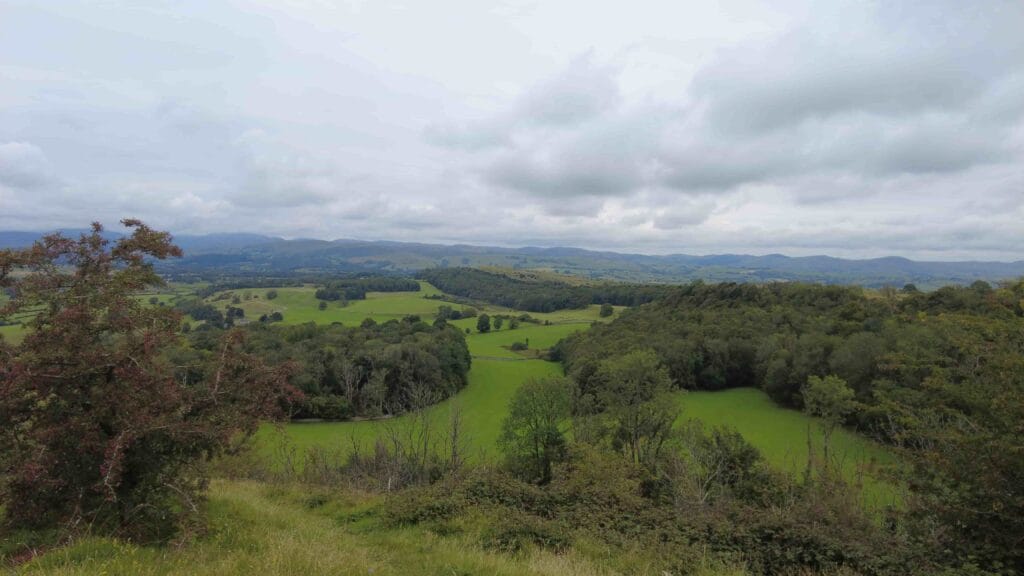
We walked Scout Scar on the limestone escarpment above Kendal. It is Renee’s place. The fell she runs every week, and where she heads for straight off the train from London to emotionally regulate, the view that made her turn to her partner and say: I think this is it.
And in that spirit, of a place that helps you land back in yourself, we talked about everything that matters. Bodies. Minds. Food. Shame. Recovery. Belonging. What it actually means to fuel a life.
Finding Belonging: A Life Built North
Renee was born in London and grew up there, but always felt like she was somewhere she didn’t quite fit. When she and her partner came to the Kendal Mountain Festival and ran up Scout Scar, something changed and, within a year, they had moved.
“The best decision I’ve ever made in my entire life,” she told me “Choosing to move up here.”
That sense of belonging, and its absence, threads through everything Renee has lived and everything she does professionally. Growing up as the only Asian girl in a school where almost everyone else came from affluent families, experiencing racism and sexual abuse as a teenager, developing an eating disorder as a way of containing a life that felt uncontainable. She has lived the story she now helps others to write their way out of.
“The Eating Disorder Was My Companion”
Renee speaks about her teenage eating disorder with clear-eyed honesty and clarity that she’s worked hard to arrive at with years of therapy, professional insight, and choosing leaning into it.
“I felt insignificant. The eating disorder helped me feel nothing. It contained everything. I only know this now because of the work I’ve done. At the time, none of it made sense to me.”
She is careful to name what the disorder was actually doing, not a vanity project, not a simple control mechanism, but a response to violation, to racism, to the grinding loneliness of not belonging. Her body became the only territory she felt she could manage.
And she is equally careful to say: those behaviours were coping mechanisms, not character flaws.
“To be human means we’re going to make mistakes, we’re going to try and keep ourselves safe. If that means we learn slightly dysfunctional behaviour to do so, it’s not agreeing with those behaviours, but it’s acknowledging them.”
The Psychology is the Nutrition
After 26 years as a registered dietitian, Renee is unequivocal: you cannot help someone change their relationship with food if you do not understand human behaviour first. She has qualifications as a mindfulness practitioner. She is on the international task force for orthorexia. She is nutrition lead for the English and Scottish National Ballet.
Her clients often arrive expecting to be told what to eat.
“And actually, we’ve done something completely different,” she says. “And they go: I wasn’t expecting that, but I can see why, now.”
One of the themes she returns to most is the modern tendency to separate the mind from the body.
“We’re so good at leaving our bodies and living in our minds. And yet our mind is the most unreliable narrator.”
She talks about the power of reframing discomfort as unfamiliarity.
“As soon as you say something’s uncomfortable, there’s a human bias to move away from it. But unfamiliar? That’s just something different. Something you haven’t done enough times yet.”
REDs: The Condition Nobody Talks About Enough
Relative Energy Deficiency Syndrome (REDs) is Renee’s specialist terrain, and one of the most misunderstood conditions in sport and everyday fitness.
Simply put, it occurs when the body is not given enough energy relative to the work it is being asked to do. And crucially, it is not just about elite athletes. Renee sees it in office workers who get up at 5am for a HIIT session without eating, in recreational runners training for a marathon, in anyone whose “move more, eat less” mindset tips into a deficit their biology cannot absorb.
“Symptoms take 6 to 18 months to fully show. So by the time someone comes to me, they can’t connect the dots between their original behaviour and what’s happening to their body now.”
Hormonal disruption. Recurrent injury. Gut problems. Flat mood. In the worst cases she has seen in clinic, a 17-year-old girl had every major biological process in her body affected.
“It was frightening,” Renee says. “And nobody is immune.”
Fuel For Thought: The Book Renee Always Wanted to Write
Renee’s most recent book, Fuel for Thought, is different from everything that came before it. It is the book, she says, she probably always wanted to write.
“It cuts through the noise. I talk about my own experiences, my eating disorder, my relationship with my body, when I got it wrong with my running. I talk about what I’ve learned working with professional athletes. Things you’ll never pick up from a textbook.”
It is also a fiercely practical book. No goji berries, or obscure ingredients. It’s about good food, simply prepared, accessible to anyone, including Renee’s own daughters. One of her recipes has already made its way to student halls.
“Maya had to cook it for her friend at uni. And then her friend came to stay and I made the original. That was the whole point.”
The feedback that moves Renee most is from readers who tell her the book has changed their whole relationship with food.
“I was never trying to be a voice of reason,” she says. “But I guess that’s what happened.”
Therapy Is Not About Being Fixed
Renee has been in therapy, on and off, since she was 15. She speaks about it as straightforwardly as she speaks about running, a practice, a necessity, something that has taken many forms at different points in her life.
“When I first got support, at 15, it was the worst support I could have got. The focus was purely on weight restoration. Not on understanding the behaviour. So I did what I was told, and then the moment I was free of it, I reverted back.”
Since 2020, she has worked with a therapist she finally feels truly understood by. Not weekly now, more as she needs it.
“It’s more of a holding space. But I think I’ll always need that space, because of the work I do, and because of the type of person I am.”
Her message on therapy is simple:
“It’s not about changing you. It’s about understanding you, and finding healthier strategies to support yourself.”
On Kindness, Relationships and Chosen Family
By the time we reached the Mushroom viewpoint, that 360-degree panorama that made Renee fall in love with Kendal, we were talking about love and the people we choose to keep in our lives.
Renee speaks with warmth and quiet certainty about her partner, who she describes as
“one of the kindest people I’ve ever known”.
After a divorce that she processed in therapy with unflinching honesty, she has arrived at what she calls a “grown-up relationship”, built on shared values and the love of the outdoors.
“Just because you find your person doesn’t mean it magically happens. You have to work toward it. But I feel like we both know, we found our person.”
She is equally intentional about friendship.
“Everyone in my life is in my life because there’s a place for them. Family is who you choose. That’s very much the case for me.”
Final Thoughts
Walking Scout Scar with Renee McGregor was definitely a walk and talk with someone who walks the walk ; Renee has lived through the things she now help others survive, and who has the professional rigour and personal honesty to make that count.
She did not arrive at her work easily. It was built across decades of therapy, setbacks, clinical practice, and the slow, unglamorous business of learning to understand herself. And the hill she ran up on a weekend away years ago, that made her say “this is where I belong”, turns out to be the hill that lets her keep doing all of it.
If you are someone who struggles with your relationship with food, exercise, or your body, or if you simply want to understand it better, this episode is for you. And so is Fuel for Thought.
“Your story might be just what someone needs to hear today.”
Renee’s certainly is.

Resources & Connect
Renee McGregor is a leading sports and clinical dietitian with over 25 years’ experience in performance and clinical nutrition. She is Nutrition Lead for both the English and Scottish National Ballet, a member of the international task force for orthorexia, and one of the UK’s foremost voices on REDs (Relative Energy Deficiency Syndrome), the female athlete, and hormonal health.
She has worked with elite sport science teams at major championships including the Rio 2016 Olympics, and consults across a wide range of teams and brands on nutritional and clinical guidance for both performance and health.
Renee is the author of six books, including More Fuel You (2022) and her most recent title, Fuel for Thought — a practical, honest, and deeply personal guide to fuelling life, not just sport. She lives and runs in Kendal, Cumbria.
Links:
- Instagram: @r_mcgregor
- Website: reneemcgregor.com
- Book: Fuel for Thought: Available from all good bookshops
- S3’s music partner is: A Band Called Persimmon. You can check them out here: https://www.youtube.com/@bandcalledPersimmon
- Find Sukany4 – The Podcast on all major platforms. Leave us a review — it genuinely helps more people find the show.
Scout Scar is a limestone ridge sitting just above Kendal in Cumbria, offering one of the most generous viewpoints in the north of England. From the famous Mushroom shelter at the top, you get a 360-degree panorama taking in the Lake District fells, Morecambe Bay, the Yorkshire Dales and Morecambe Fell. It is wild enough to feel like a proper escape, accessible enough to be a weekly ritual. For Renee, it is both.
“Every time I’m stressed out, whenever I’ve had a trip down to London — the first thing I do when I come back is come up here. As soon as I see the hills, my breathing calms down. I just feel like I belong.”