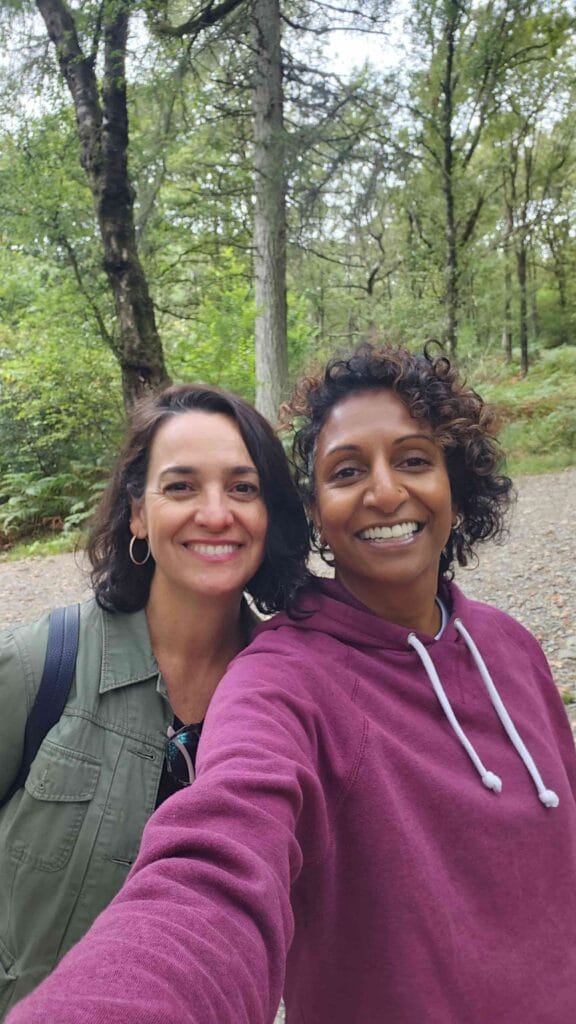
Meeting Lara Roocroft
Lara Roocroft is has a 30 year career in caring roles, starting as a nurse and now as a counsellor, trainee psychotherapist, and she’s also a yoga teacher, gong bath facilitator, and mother, though she would probably tell you that what she really is, above all of those titles, is someone still figuring out who she is at her core. Born and raised in Brazil, she moved to England in 2007 at the age of 32, with two young boys and very little else. She arrived, she says, back in survival mode.
That phrase, survival mode, comes up more than once in our conversation at High Dam. Not with heaviness, but with a kind of warm recognition. She has been here before. She knows this place inside herself. And perhaps that’s what makes her such a powerful presence in a therapy room.
Thirty Years of Helping Others (and Quietly Helping Herself)
Lara began her career as a nursing technician in Brazil. By the time she arrived in the UK, she had a nursing qualification, retrained as a registered nurse, and built three decades in healthcare. But it’s only in the past few years, as a counsellor and now training as a psychosynthesis psychotherapist, that she says she finally understands what she has really been doing all along.
“I used to think I was helping people. But mostly I was helping myself to grow and expand. We have this idea that we are helping people, but we are learning from it. And healing from it too.”
That kind of honesty is disarming. And it sets the tone for everything that follows.
What Is Psychosynthesis, and Why Does It Matter?
Lara shared that Psychosynthesis is sometimes called the psychology of hope. Where many therapeutic modalities focus primarily on what is broken, diagnosing the crisis, tracing the wound, psychosynthesis asks a different question: what is the potential? Not who is this person right now, in pain, but who could this person be at their fullest, most authentic self?
Lara describes sitting with clients and offering them what she calls the experience of being truly seen, heard, and held with compassion. She uses guided meditation, somatic awareness, and even elements of her yoga training to help people access parts of themselves they’ve long since walled off. She talks about sub-personalities, the protective parts of us that were formed in childhood to help us cope, and the importance of recognising that they serve a function, even when they have overstayed their welcome.
“You might struggle to have compassion for yourself now. But if you think about the seven-year-old you, going through something really hard, you can connect with that child. And when you feel something for her, you release something. And then you can be more gentle with yourself.”
It’s a model that doesn’t require religious belief, she’s careful to say. She has worked with atheists, agnostics, and deeply spiritual clients. The ‘higher self’ in psychosynthesis is simply the most integrated, wisest version of you, available to everyone, regardless of belief system.
The Weight of Carrying Patterns We Never Chose
One of the most striking threads in our conversation is the question of generational patterns and the stories we absorb before we’re old enough to interrogate them. Lara speaks about epigenetics, the emerging science showing that our genes are not fixed determinists but are influenced by what we eat, how we think, and the habits we keep. It’s empowering, she says, to know that the story is not already written.
She speaks with vulnerability too about her own patterns, particularly around what she calls the tendency to victimise herself, something she traces back to her mother’s emotional habits. What’s remarkable is how she names it not with shame, but with the kind of clear-eyed compassion she tries to extend to her clients. She is, as she says, still doing the work.
“Words have so much power and energy. So you have to be really mindful, even things we say like ‘I’m so stupid’ or ‘I’m not lucky.’ Just choose your words carefully. Especially towards yourself.”
On Community, Belonging, and Finding Your Tribe
Away from the therapy room, Lara runs yoga and gong bath sessions for elderly residents in care homes in the Grange area, something she describes as her gift to the community. She also speaks warmly about networking groups like Pink Link as unexpected spaces of healing: places where women witness each other, encourage each other, and are simply seen.
Connection, she insists, is not a luxury. It is a biological necessity. Belonging, not just fitting in, but truly belonging, is something she believes most of us are quietly starving for. And we won’t find it by waiting for someone else to create the space.
Final Thoughts
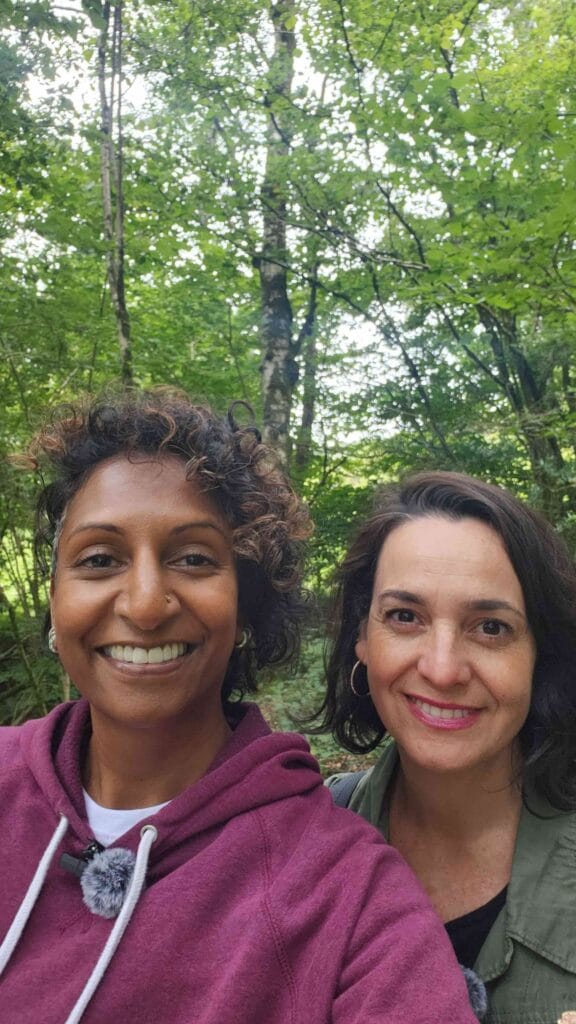
This episode has texture. There’s the psychotherapy and the deep questions of selfhood. But there’s also Lara teaching chair yoga to elderly residents and inviting them, in a moment of profound tenderness, to hug their inner child while they open their arms wide. There’s the gong bath she invited Sukanya to experience. There’s the 74-year-old auntie who walked this very path last weekend and was absolutely fine, thank you very much.
Lara is not one-dimensional. She is someone who has lived across continents and cultures, built a career with her hands and her heart, raised two children largely alone in a country that is now very much her home, and is now, in what she calls the most transformative chapter of her life, finally learning what it means to know herself.
What stays with you after this walk is something Lara says towards the end, about the relationship between what we tell ourselves and what we become. That if we believe we are destined for something, for illness, for loneliness, for failure, we tend to be right. And if we begin, carefully, to choose different words, different thoughts, different intentions, that changes too.
It’s not toxic positivity. It’s not a self-help mantra. It’s 30 years of nursing, several years of deep psychotherapeutic training, and a lifetime of honest self-examination, all distilled into a walk around a beautiful tarn in the Furness Fells.
You might want to listen twice.
Resources & Connect
Lara’s journey spans three continents and thirty years of caring for others, from nursing wards in Brazil to therapy rooms in Cumbria. A qualified Counsellor, now training as a psychosynthesis psychotherapist, she has discovered that the work she thought she was doing for others was quietly healing her all along. Her gift to every client: the experience of being truly seen.
Links:
- Website: https://lararoocroft.com/
- Psychology Today Profile: https://www.psychologytoday.com/gb/counselling/lara-roocroft-ulverston/1472084
- Instagram: https://www.instagram.com/lara_psychosynthesis_therapist/
- LinkedIn: https://www.linkedin.com/in/lara-roocroft-42484234
S3’s music partner is: A Band Called Persimmon. You can check them out here:
https://www.youtube.com/@bandcalledPersimmon
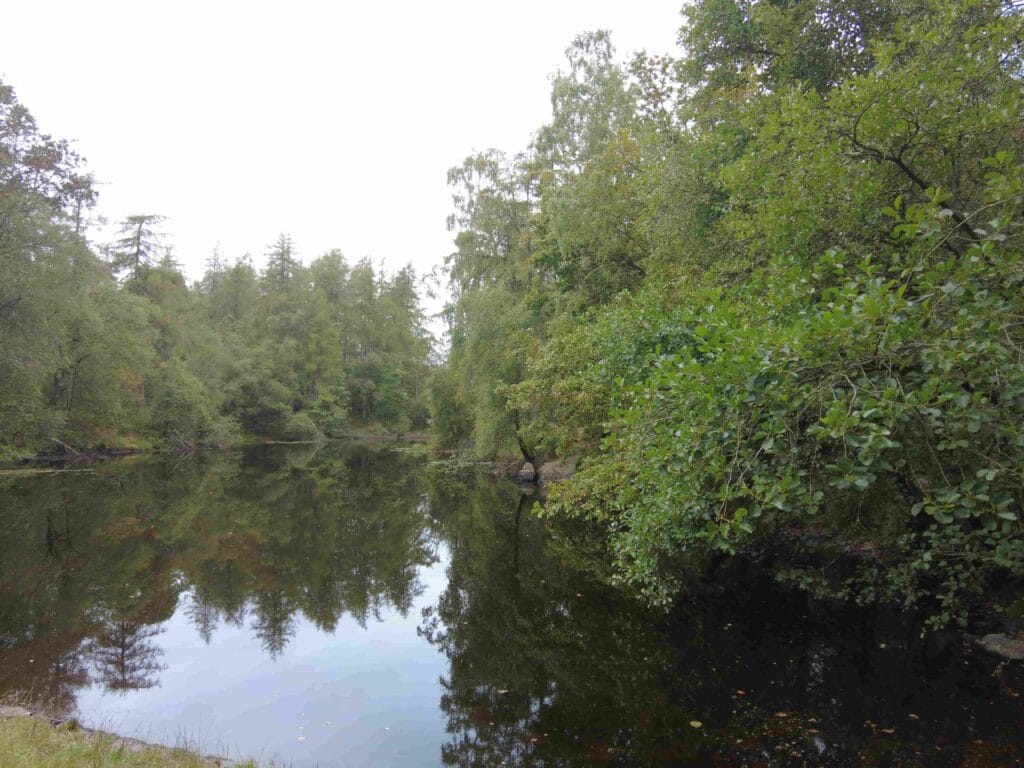
High Dam Tarn sits above Finsthwaite in the Furness Fells. It is a short and rewarding loop through ancient woodland and out onto open moorland above the tree line. The reservoir-turned-tarn is still enough to mirror the sky on a calm day, and in summer, it’s popular amongst swimmers in its cool waters. It’s gentle enough for a 74-year-old, as Lara proved just the week before recording, and beautiful enough to stop conversations, as it did it did. A few times.