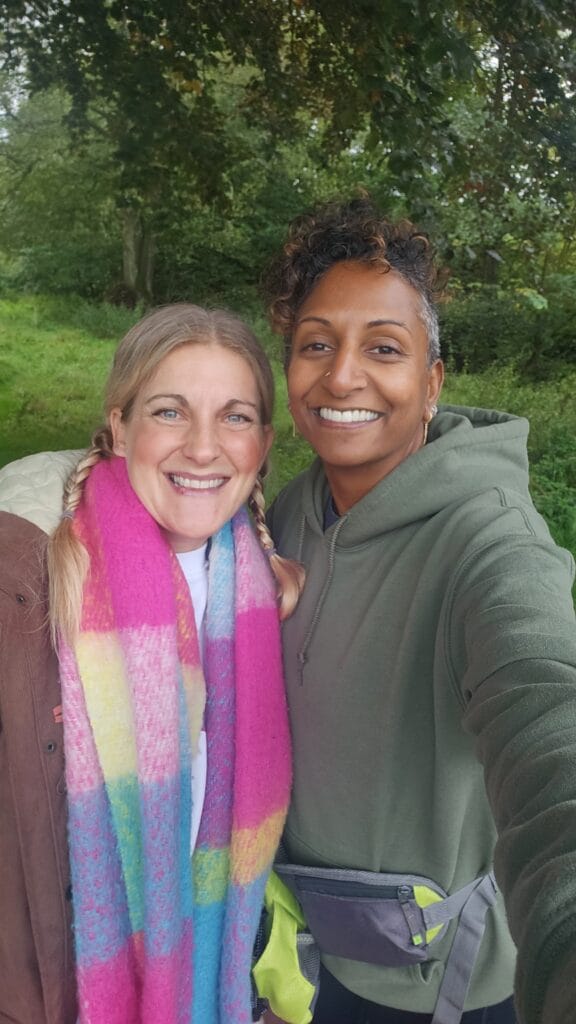
There’s something magical about having meaningful conversations while walking through the Cumbrian countryside. The rhythm of footsteps, the sound of rushing water, and the crunch of autumn leaves create the perfect backdrop for discussing life’s most important topics. That’s exactly what happened when I met Sam Massey on a beautiful stretch of the Cumbria Way near Colbeck.
From Flight Attendant to Youth Worker
Sam’s path to becoming a youth and community worker wasn’t traditional, but then again, the most impactful journeys rarely are.
“I really struggled with school,” Sam admits as we navigate the muddy riverside path. “I was probably a bit of a middle child, didn’t need extra support, but nor was I a genius.” Growing up in the 90s with its particular pressures around conformity and social acceptance, Sam eventually stopped attending school at 15.
At 19, Sam landed a job as a flight attendant with Virgin Atlantic, a position that required moving to London and completing an intensive eight-week training course with daily exams. “I just seemed to be doing really well,” Sam reflects. “It was a real moment where I was like, oh my God, I can actually do this. Other people are struggling, and I seem to just be able to do it.”
That realisation changed everything. With newfound confidence, Sam applied to university to study psychology, without A-levels. When a senior lecturer said, “We haven’t seen someone without A-levels before, but we’ll give you a go,” Sam proved that traditional qualifications aren’t the only measure of capability, and you have to advocate for yourself.
The Power of Mentorship and Linda’s Legacy
Every meaningful career has its defining moments, and for Sam, one stands out with crystal clarity.
Working at a youth centre in Wigton, Sam encountered Linda, a mentor who would fundamentally shape her understanding of youth work. Sam shares a powerful memory: young people came into the centre to report that someone they knew was lying on the street, with an undertone of mockery in their voices.
“She went out and sat on the street with him, bought him a portion of chips, put her arm round him,” Sam recalls, emotion evident in her voice. “She was just that person who had no judgment. She was there for him, whatever, unconditional support network.”
Linda, who had earned her PhD and worked at the university, could have stayed comfortably in academic settings. Instead, she chose to be present in people’s darkest moments.
“She was so much of the people and the people that she advocated for,” Sam explains.
When Sam considered leaving youth work years later, Linda’s words echoed: “Youth work needs you. Don’t leave.” It was enough to keep Sam committed to a field that would become her life’s work.
What Makes Youth Work Different?
As we walk further along the woodland path, Sam explains something crucial about youth work that many people don’t understand.
“It’s one of the only roles in lots of young people’s lives that isn’t an authority figure,” she emphasises. Unlike parents, teachers, social workers, or police officers, youth workers occupy a unique space, one built on mutual respect rather than power dynamics.
“The young people that would come to my projects came voluntarily. Nobody told them to come,” Sam explains. “They came because they wanted to be there. And that’s powerful in itself.”
This voluntary engagement creates opportunities for genuine connection and transformation. Sam shares the story of a group of young people in Wigton who felt unfairly judged by their community. They decided to organise a community event to change perceptions, despite the town council’s scepticism.
“That just made them more determined,” Sam says with evident pride. “Now, as young adults, they know how to make their voice heard. They know that they can go to the town council and say, ‘Well, actually, this is, I’m a citizen and this is what I think.'”
Woman Up: Creating Inclusive Spaces for Change
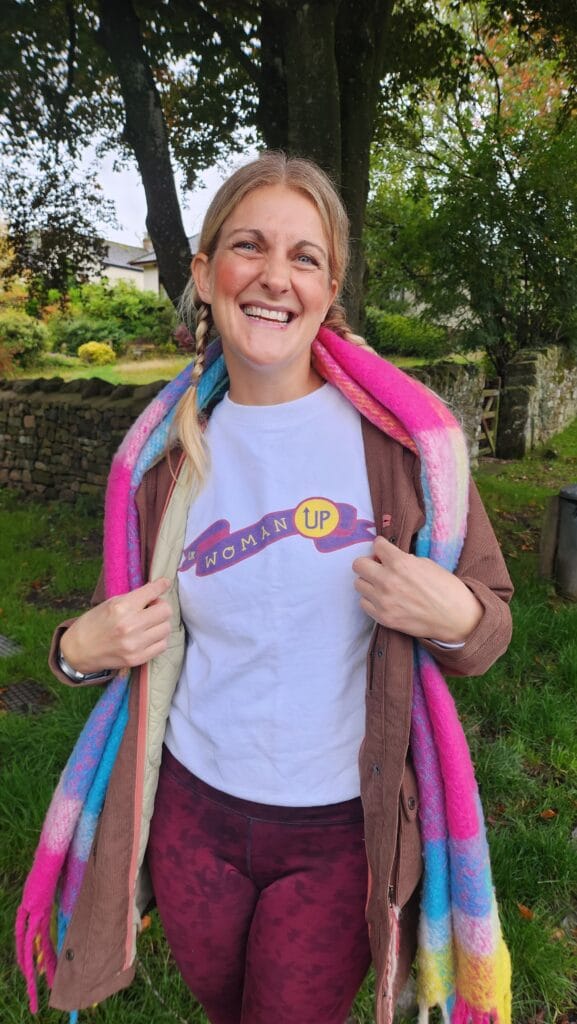
Sam’s work extends beyond traditional youth services through Woman Up, an organisation she co-founded and is focused on creating inclusive spaces for education, discussion, and community building in Cumbria.
“We very much have an inclusive feminism,” Sam clarifies. “Everything we do includes non-binary people. That’s part of our bedrock.”
Woman Up runs various programs throughout the year:
- International Women’s Day Open Mic Events: Where Sukanya made her spoken word debut
- Conference-Style Events: Featuring speakers on topics like justice through women’s eyes
- Period Workshops in Schools: Reaching entire Year 6 classes with boys and girls together
- Monthly Coffee Morning Gatherings: In collaboration with Carlisle International Women’s Group
- Girls-Only Youth Groups: Recently launching at Carlisle Youth Zone
The period workshops particularly highlight Sam’s approach to reaching people who might not otherwise engage with these issues. “It platforms a lot of opportunities to explore shame, to explore gender, to explore issues that highlight the inequitable relationships between men and women,” Sam explains. “It’s the entire class you’re reaching, it’s not just those who’ve signed up for it.”
Addressing Today’s Challenges: Far-Right Rhetoric and Misinformation
Our conversation takes a sobering turn as we discuss the rise of far-right rhetoric and misinformation affecting young people today.
Sam shares a recent experience with her 12-year-old daughter, who stood up in class to challenge anti-immigration views held by most of her classmates. “She said it was only her and one other person that had that view,” Sam recounts. “Everybody else in the class had the far-right kind of mentality.”
It’s a grounding reminder of how quickly harmful ideologies can spread, particularly through social media algorithms that feed people increasingly extreme content.
“You only have to look at something that is anti-immigration once and your algorithms and everything that you’re fed chimes to that kind of rhetoric,” Sam observes. “It’s really dangerous.”
This is precisely why Woman Up’s work in schools and youth centres matters so much. “For some young people, all they’re getting is a one-sided account of the world or a very limited understanding of the world,” Sam explains. “Having safe spaces for young people to have those conversations, even if they don’t know that they want those conversations, is so important.”
Sam offers a powerful principle:
“You can’t hate up close.”
When young people get to know people from different backgrounds, when they hear their stories and understand their experiences, it becomes much harder to hold onto prejudice and hatred.
Supporting people seeking Asylum: Building Community in Isolation
Sam’s current project involves supporting a group of women seeking asylum and children living in remote, isolated towns with limited services and support networks.
“There’s no network. There’s nothing at all. It’s really isolated,” Sam explains.
Through Penrith and Eden Refugee Network, Sam was asked to check in on them and welcome them to the area.
“You very quickly build relationships and trust with that group who really don’t see many other people,” Sam shares. The women lack the means to travel to more populated areas, living in what Sam describes as “a real insight into the levels of desperation to settle here.”
Recently, Sam secured funding to develop a more structured project with this group, a victory that will allow for more consistent support and programming tailored to their specific needs.

The Importance of Self-Care in Heavy Work
I ask Sam how she manages the emotional weight of work that deals with such challenging issues. She’s honest about the struggle.
“I’m not very good at that,” she admits with a laugh. “I mean, I’m good at looking after myself, I love walking, obviously, I love a bit of yoga, I love a bit of wild swimming, just all of those things.”
Sam works one day a week with women’s walking groups in West Cumbria, which helps integrate self-care into her working week. But she acknowledges the tendency to fill free time by checking in on her groups rather than fully disconnecting.
It’s a common challenge for people doing community work, when you care deeply about the people you serve, boundaries become difficult to maintain.
What’s Next for Woman Up?
As we loop back toward the waterfall, Sam shares her excitement about upcoming plans.
“It feels like we’ve had a quieter year last year with one thing and another,” she reflects. “But there’s a real plan to push things forward in the coming year.”
Upcoming events (Autumn 2025) and programs include:
- A screening of the Frida Kahlo film at Tullie House Museum
- Collaborative walks with Queer Cumbria around Derwent Water
- The launch of girls’ groups at Carlisle Youth Zone
- Continued period education workshops in primary schools
- UK Woman Up Justice-themed events exploring the system through women’s experiences
“It feels like it’s needed more than ever at the moment,” Sam says, and it’s hard to disagree.

Final thoughts: The Ripple Effect of Youth Work
As we carefully navigate our way back down the slippery path (with me nearly dropping my phone and stumbling multiple times), I reflect on what makes Sam’s work so vital.
Youth work and community development might not always make headlines, but they create those crucial light-bulb moments that change the trajectory of lives. A mentor who sits on the street with someone at their lowest point. A workshop that helps young people understand their bodies without shame. A space where teenagers can challenge their town council and learn they have power.
These moments ripple outward, creating adults who know how to advocate for themselves and others, who question what they see on social media, who stand up for their classmates when harmful rhetoric takes hold.
In an era of increasing polarisation and misinformation, the work that Sam and organisations like Woman Up are doing is essential. They’re creating the spaces where understanding can grow, where “you can’t hate up close” becomes a lived reality.
And sometimes, the best place for these important conversations is on a muddy path alongside a rushing river, with autumn leaves crunching underfoot and the promise of a waterfall just around the bend.
Want to learn more about Woman Up’s work or get involved? Follow @UKWomanUp on social media or reach out to discover how you can support youth and community work in Cumbria.
How to Get Involved
Whether you’re a young person looking for a welcoming space, someone interested in community work, or simply want to meet new people in a non-judgmental environment, Woman Up welcomes everyone.
Find them on social media: @UKWomanUp (across all platforms)
As Sam puts it: “I just really urge anybody who wants to meet people in a non-judgmental way to get involved.”